
Term vs Whole Life Insurance—What’s the Difference?
Understand how each type works, what they cost, and which one may be the right fit for your situation.
✔ No obligation
✔ Fast, simple process
✔ Personalized estimates
The Simple Difference Between Term and Whole Life
Term life insurance is designed to cover you for a specific period of time, while whole life insurance is designed to last your entire life.
For most people, the decision comes down to one key question:
Do you want affordable protection for a set period, or lifelong coverage with additional features?
The simplest way to understand term vs whole life insurance is this: term life gives you affordable coverage for a set period, while whole life provides permanent coverage with a built-in cash value component—but at a significantly higher cost. For most people, the real question isn’t just the difference, but which option fits their goals and budget. If you’re focused on maximizing coverage and keeping costs low, term life insurance is often the more practical choice. Whole life may appeal to those looking for long-term financial planning features. The good news is you don’t have to guess—our platform allows you to compare both term and whole life insurance options side by side, so you can quickly find the right coverage at the best possible rate for your situation.
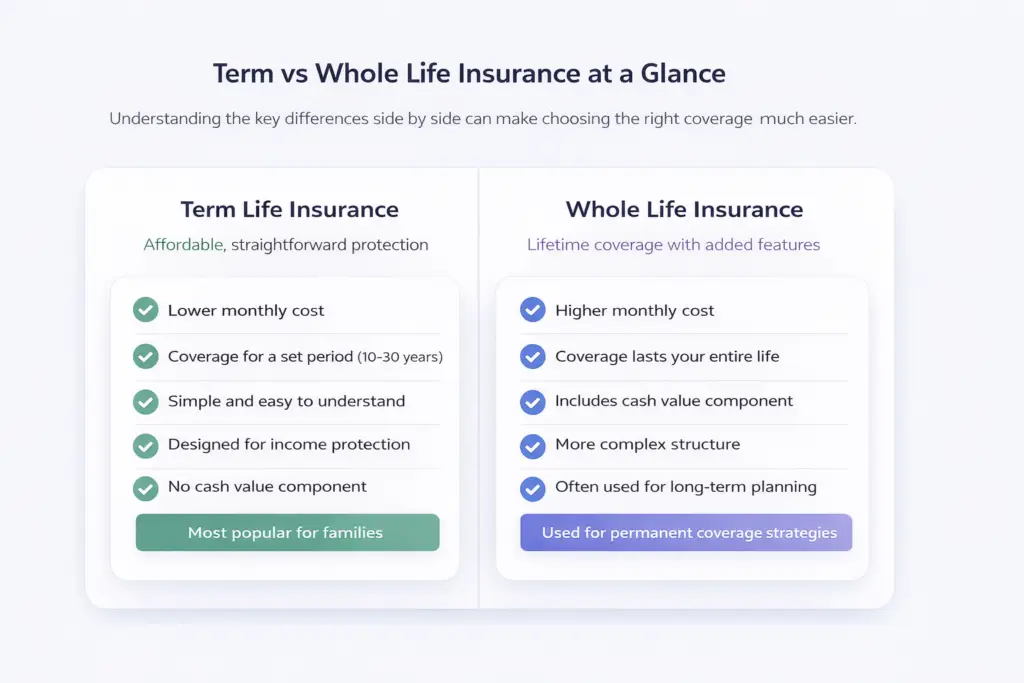
Term vs Whole Life Insurance Comparison
Term Life Insurance is typically the more affordable option and is designed to cover you during important financial years, like while paying off a mortgage or raising a family. It provides straightforward protection without added complexity.
Whole Life Insurance provides lifelong coverage and may build cash value over time. It’s often used for long-term planning but comes with higher premiums.
Key Differences That Matter Most
The biggest difference most people notice right away is cost. Term life insurance is generally much more affordable, allowing you to get higher coverage amounts for a lower monthly payment.
Whole life insurance, on the other hand, typically costs significantly more because it lasts your entire life and includes additional features like cash value accumulation.
Another major difference is flexibility. Term life is simple and focused purely on protection, while whole life is more complex and often used in broader financial planning strategies.
When Term Life Insurance May Be a Good Fit
Term life insurance is often a strong choice for people who want to protect their family during key financial years without overpaying.
Term life insurance is often the best option for people who want affordable, straightforward coverage for a specific period of time. It is especially useful for covering temporary financial responsibilities like a mortgage, raising children, or replacing income during working years.
Learn the basics → Life Insurance Basics
Because term policies are significantly lower in cost compared to whole life insurance, many families are able to secure higher coverage amounts for the same budget. This makes term life insurance one of the most practical choices for protecting your home and providing financial stability.
When Whole Life Insurance May Be a Good Fit
Whole life insurance may be a better option for individuals who want permanent coverage and a policy that builds cash value over time. This type of policy can be used for long-term financial planning, estate considerations, or leaving a guaranteed benefit behind.
It is often used in long-term financial planning situations and may appeal to those looking for more permanent solutions.
However, the higher cost means it’s important to evaluate whether the added features align with your financial goals, especially when compared to the affordability of term life insurance.
What Most People Actually Choose
For many families, the priority is simple—protect income, cover major expenses, and keep things affordable.
Because of that, term life insurance is often the most common choice for people who want straightforward protection without unnecessary complexity.
That said, the right choice always depends on your individual situation, goals, and preferences.
See What Coverage Might Look Like for You
Getting a personalized estimate can help you understand what fits your situation without guesswork.
✔ No obligation
✔ Fast and simple
✔ Based on your needs